|
PANOS SOUTH ASIA PAKISTAN ROUNDTABLE
Reporting Poverty, Influencing Policy
Success Stories in Poverty and Communication
Tuesday 24th November, 2009 Marriot Hotel, Islamabad
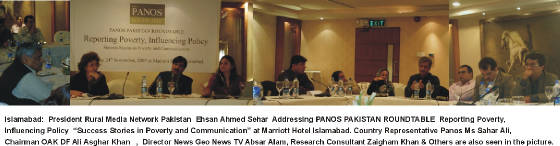
Islamabad: Panos South Asia Pakistan organised a one day roundtable on Reporting Poverty, Influencing Policy in the Marriot
Hotel, Islamabad which was attended by thirty representatives of prominent non-governmental organisations and media.
Ms Sahar Ali, Country representative PANOS, informed that
over the last year PANOS Pakistan had carried out
research into the communication and advocacy efforts of three
Pakistani organisations that have striven to address the issue of
poverty and deprivation by providing a platform for the poor to engage
with the state/policy makers on the policies that impact their
lives.
Mr Ziagham Khan, Research Consultant, presented a case study
"Bringing the media mountain to Hazara Hillsides." He highlighted the
activities the NGO Omar Asghar Khan Foundation carried out in the 2005
earthquake. The second case study "Putting Mancher on the Map: Raising
Voices for Lost Liveliloods at Manchar Lake" was presented by the country
representative Panos Pakistan, Ms Sahar Ali, and the third case
study "Unleashing a Barrage of Protests: Displacement and Resistance
at Taunsa Barrage" was also put to the roundtable by Mr Zaigham Khan,
Research Consultant.
Documentaries regarding the Mancchar Lake disaster and
"Daring to Dream" on the Taunsa Barrage were also watched by
participants. Ali Asghar Khan, Chairman OAK DF, Ms Zubeda Birwani, Manager
Advocacy, ShirkatGah Sindh, Musthaq Gadhi, Academic and Activist, head of
Hirac Trust besides other participants passed their comments. A Question
and answer session was also conducted in which Bureau Chief Mehran, TV
channel, Representative Asian Development Bank(ADB) and Action Aid
along with other participants expressed their views. Country
Representative PANOS Pakistan, Ms Sahar Ali, presented A SWOT
Analysis. Afterwards a discussion on strengthening civil society organisations
and the media was held.
The majority of NGOs office bearers complained that both print and
electronic media are not covering their humanitarian assistance
activities. They severely criticised the role of some anchor persons of
independent TV channels, district correspondents, and urban based
media.
The Director News GEO TV Channel, Mr Absar Alam, told the participants
that the office of the director news is the most powerful in any news
TV channel organisation. He asked the NGOs and CSOs to keep close
liaison with directors news of independent TV Channels and anchor
persons so their activities can be highlighted. It is the only way to get
prominent TV coverage, he concluded.
The President Rural Media Network Pakistan (RMNP) Ehsan Ahmed Sehar told the participants that district
correspondents are the backbone of the media industry in Pakistan, but
no media house has yet paid attention to capacity building of
the district correspondents who represent 65% of the populace
of the country. He said that 99% of district correspondents are not
paid or poorly paid, but despite it they were reporting to both print
and electronic media in Pakistan. He said that print and electronic
media in Pakistan is based in major cities but the district
correspondent released a large number of breaking news stories.
Citing the example of the Mukhar Mai gang rape incident, he said this story was
first reported by a rural correspondent based in Jatoi, District
Muzzafar Garh, South Punjab and published in a regional newspaper Naya
Daur Multan. Afterwards it was picked up by the international newsagency
AFP and received extensive coverage in both national and
international media. Now gang rape victim Mukhtar Mai is one of the
torch bearers of women's rights in rural Pakistan and her NGO Mukhtar
Mai Welfare organisation is also beneficiary of NED with OAK
DF.
The President of RMNP underlined the need for capacity building of
district correspondents and urged NGOs and CSOs to collaborate with
national and regional media organisations so training programmes for
rural female journalists can be launched. He stated that an unfortunate
aspect of Pakistani journalism is that there were many distinguished
women journalists in cities but none in rural areas. He added that
rural societies are highly segregated and the lack of women journalists meant
that media did not properly cover a large segment of rural life.
 Asian Media Barometer Pakistan
Organised by Friedrich Ebert Stiftung
14 members panel concludes its consultation in Lahore
Ehsan Ahmed Sehar presented RMNP analysis of the media landscape in Pakistan
Lahore September 6: Friedrich Ebert Stiftung (FES) Pakistan organized two days long panel consultation to inaugurate The Asian
Barometer - Pakistan at Avari Hotel Lahore on 5th and 6th September .Friedrich Ebert Stiftung (FES) had invited seven leading
experts from media and seven from civil society for conducting home grown analysis of the media landscape in Pakistan. Mr
Rolf Paasch Director FES-Media Project Southern Africa and Mr Ghazi Salahuddin Editorial Director GEO TV were the moderators
with Ms Sehar Ali Country Representative PANOS South Asia as Rapporteur while Dr Mehdi Hassan Chairman Department of Journalism
Beconhouse National University (Lahore), Adnan Rehmat Country Director Internews (Islamabad), Ehsan Ahmed Sehar President
Rural Media Network Pakistan (AhmedpurEast), I.A.Rehman Secretary General Human Rights Commission of Pakistan (Lahore), Javed
Jabbar, former federal minister for Information & Chairman J.J. Media Private Limited (Karachi), Aftab Alam Advocate at [Media]
law and Policy, (Islamabad) Mazhar Arif Executive Director Society for Alternative Media &Research (Islamabad), Najam Sethi
Editor-in-Chief The Friday Times (Lahore), Najib Ahmed President Association of Independent Radio/Director Power 99 FM Radio
(Islamabad), Zafar Abbas Resident Director Dawn (Islamabad), Ms Moneeza Hashmi General Manager International Relations HUM
TV (Lahore) and Matiullah Jan Senior Correspondent Dawn (Islamabad) were invited as the panelists.
Asian Media Barometer Model Programme started in the function room of Avari Hotel on 5th September at 9.30 AM.Both moderators
and panelists introduced themselves.Mr Henning Effner Resident Representative and Mr Abdul Qadir Country Programme Coordinator
FES Pakistan were also present on this occasion as hosts with their team. A four sector framework for panels deliberation
was sent two weeks ago to all invited panelists to judge the each sectorial indicator by allocating individual scores to all
45 indicators after the qualitative discussion in an anonymous vote according the following scale.
1 Country does not meet indicator
2 Country minimally meets aspects of the indicator
3 Country meets many aspects of indicator but progress may be too recent to judge
4 Country meets most aspects of indicator
5 Country meets all aspects of the indicator and has been doing so over time
All panelists went in self accessment process through the indicators in a detailed discussion and determined (quantative)scores
for each indicator of Freedom of Expression,Media diversity,independence and sustainability,Broadcasting regulation and
Professional Standards sectors. In two days long deliberations, members of the panel attached their individual point-score
(1-5) to each sub-indicator of the sector. The sum of all individual scores was divided by the panel members .The result
was considered the final score for the sub-indicators.
After the completion of this process, to facilitate new strategy for the next two years, the following five questions were
discussed by the panelists in last session.
1) Positive developments in the media environment in the last two years.
2) Negative developments in the media environment in the last two years.
3) Main drivers/actors for positive change.
4) Possible obstacles for further development.
5) Activities needed over the next few years.
President Rural Media Network Pakistan (RMNP) Ehsan Ahmed Sehar actively took part in panel discussions and presented hardcopies
of RMNP analysis of the media landscape Pakistan to Mr Henning Effner Resident Representative FES, Pakistan and Mr Rolf Passch
Director FES Media Project Southern Africa. Friedrich Ebert Stiftung (FES) Pakistan office will publish this report in near
future, said Abdul Qadir Country Representative FES Pakistan.
Source.RMNP
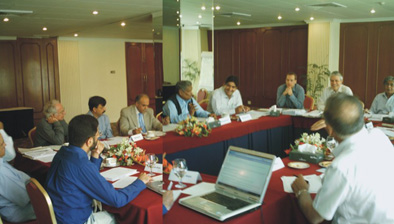 Lahore: President Rural Media Network Pakistan Ehsan Ahmed Sehar talking in FES Panel Consultation held in Avari International
to inaugurate The Asian Media Barometer Pakistan.
Lahore: Professor Dr Mehdi Hassan, Najib Ahmed, Najam Sethi, Ehsan Ahmed Sehar, Matiullah Jan, Abdul, Qadir, Henning Effner,
Rolf Paash, Ghazi Salahuddin, Javed Jabbar, Zafar Abbas, I.A.Rehman, Ms Moneeza Hashmi, Mazhar Arif, Adnan Rehmat, Ms Sehar
Ali, Ms Sabina Franze and Malik M. Rashid consulting in Conference room of the Avari International hotel to inaugurate The
Asian Media Barometer Pakistan.
|
| Dessi Damianova |
03 jul 2009
What to do for media in Honduras?
Dessi Damianova and Margriet Zoethout, Free Voice
We land with my colleague Margriet at the airport of Tegucigalpa (the capital of Honduras) on the evening of June 18th with
a feeling of huge relief. After 4 days of intensive talks with media and journalists in Guatemala and El Salvador and after
a strongly turbulent flight we are happy to have a small rest. We need to spend time thinking of what kind of regional program
for media and journalists in the region would be most appropriate (and most feasible) to develop and with which organizations
to do that. We hope to find more answers in Honduras.
Our consultant tried a number of times to organize as many meetings as possible. It turned out to be almost impossible to
talk to media and journalists these days, as they were all nervous and tense about the coming referendum on “Cuarta
Urna”, or the “Forth Ballot Box”. “People are indeed tense, especially media and journalists as they
do not know what will happen if the referendum approves the president’s plans, maybe all media will be nationalized”,
says Humberto Quíroz, director of C-Libre, an organization that promotes freedom of expression and access to information in
Honduras. According to him some of the gaping problems of journalism in Honduras at the moment are the low quality and the
lack of ethical standards. “Many media look for sensationalism, journalists are not motivated and there is a high degree
of self-censorship”, adds a lawyer of C-Libre, who trains journalists how to apply better the existing legislation on
access to information and how to use it for investigative reporting.
The lack of ethical standards and the “low morality of media and journalists” in Honduras is also a matter of
concern for the president head of the Journalists’ Union in Honduras (CPH), Mr. Elán Reyes Pineda. We reach CPH with
half-an hour delay after our taxi driver tried to find the Union’s office, which address is not exact, but orienting:
the second street to the left after the gas station, then the third corner to the right behind the pharmacy. My colleague
and me think it is some kind of a joke, but the taxi driver confirms that “here in Honduras, we work with points of
reference, not with exact addresses”.
“There is only one option for good journalism, and it is the morality of journalists”, says Pineda is the huge
empty office of the Journalistic Union. When asked about the biggest problems for journalists apart from ownership monopolies
of media and violence, he states that these two are part of the reasons for certain apathy, for self-censorship and for certain
fear among many journalists.
Our last stop in Honduras is at the Commission for Anti-Corruption (CNA). Margriet and me are used to visit organizations
dealing with corruption, which are not so openly advertising that they are fighting corruption. The office of the CAN has
huge signs above the entrance, which is guarded by a heavily armed soldier. Thelma Mejia, the director of CNA, also mentions
the
decreasing quality of the media as major concern.
“There are only few outlets that dare to be critical. Many journalists, especially in the provinces, exercise very strict
self-censorship”, says Mejia. She adds that, interestingly enough, the president also considers that media have bad
quality, hence his plans to nationalize all private media and “professionalize it”. It probably would have sounded
as a paradox if it was not a real danger, explains further Mejia.
We leave Honduras just days before demonstrations break out and the president is forced temporarily out the country. A couple
of days ago several journalists were arrested and media outlets that were informing about the events were closed down temporarily.
Most of the media however, almost 95 % according to some sources, were not covering the tensed political situation. At the
height of the unrest Channel 6 in Honduras was continuously broadcasting children’s shows.
Source. Free Voice
Launching Ceremony of Online Urdu Edition
of FOE Newsletter Sadiq News
Ahmedpur Food Club,National Highway
April 26,2009
The Rural Media Network Pakistan(RMNP) with the assistance of UNESCO
has launched the electronic edition of FOE newsletter Sadiq News in
Country Urdu Language on April 26 at 8 pm in AhmedpurEast, rural
Pakistan. Emir of Bahawalpur Nawab Salahuddin Abbasi was the chief
guest in the launching ceremony which was chaired by Director Public
Relations Bahawalpur Division Govt of Punjab Nazir Khalid,while
Director Museum Hussein Ahmed Madni and regional representatives of
three mainstream political parties,PPP,PML(N),PML(QA) and President
Bar Association alongwith other speakers including journalists bodies
office bearers highlighted the role of FOE newsletter Sadiq News in
defending press freedom since December 2005.Ten senior rural
journalists representing four rural Press Clubs and National Press
Union received UNESCO book The Net for Journalists and other UNESCO
software,extra resources and lesson plans for educators.
E-edition of Sadiq News in Urdu language will be distributed online to
rural journalists and media organisations in Pakistan free of cost.
Among other things, the Sadiq News collects information from the Rural
Media Network, the National Press Union, and local reporters on press
freedom violations in remote areas. The newsletter also is a tool to
help rural journalists learn about their rights and network with
colleagues.
For more information contact pakistan.sadiqnews@gmail.com
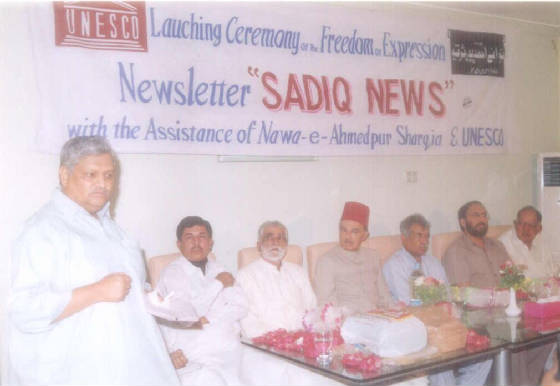
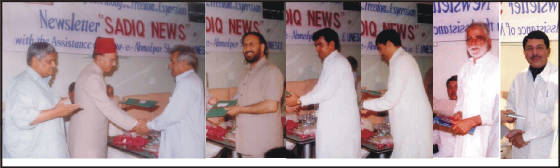
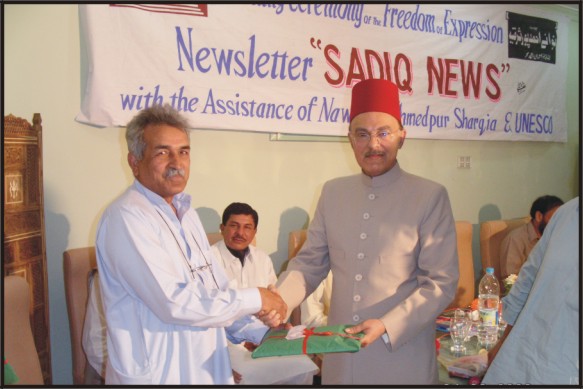
 1-Nawab Salahuddin Abbasi givining UNESCO books and training material
to journalists of National Press Union,Union of Journalists and Press
Club office bearers of Chanigoth,Mubarakpur,AhmedpurEast and Uchsharif
in a ceremony held in local hotel.(Staff Photo)
2-President RMNP Ehsan Ahmed Sehar presenting report in Sadiq News
Online Launching Ceremony,Nawab Salahudin Abbasi,Ex-Federal Minister
Farooq Azam Malik,Director Public Relations Bahawalpur Division Nazir
Khalid,Director Museum Hussein Ahmed Madni,PML(N) leader Mian
RafiaturRehman and two former Chairmen of Muncipal Committee Malik
Rasheed Ahmed and Mian Ilyas Ayaz are sitting on stage.
3-Nawab Salahudin Abbasi giving RMNP books gifts to Director Public
Relations, Bahawalpur Nazir Khalid,Director Museum Bahawalpur Hussein
Ahmed Madni,DDOR AhmedpurEast Fayyaz Hussein Abbasi,DSP Amir Taimour
Khan,Ex-Federal Minister Farooq Azam Malik and PML(N)leader Mian
RafiatuRerhman Rehmani.
4-Director Public Relations Bahawalpur Division Nazir Khalid
presenting books gift to Nawab salahuddin Abbasi on the behalf of the
Rural Media Network Pakistan
5-Nawab Salahuddin Abbasi,Director Public Relations Bahawalpur Nazir
Khalid ,Ex-federal minister Farooq Azam Malik,Director Museum Hussein
Ahmed Madni,PML(N)leader Mian RafiaturRehman Rhmani,Ehsan Ahmed
Sehar,President Bar Association Khalid Khan Baloch,District General
Secretary PML(QA)Syed Salahuddin Ahmed Jeelani,District General
Secretary PPP Bahawalpur Mohd Ali Ahsan and General Scretary National
Press Union Mazhar Rasheed addressing the launching ceremony of the
Online Edition of Urdu FOE Newsletter Sadiq News in local hotel.
Commonwealth Journalists Association 8th Conference concludes in Kuching Malaysia
President RMNP Ehsan Ahmed Sehar
presented Pakistan media situation report.
Kuching (Malaysia)October 18, 2008: Commonwealth Journalists Association 8th Conference News Targets
for Today, Better Environment and a better democracy ended in Kuching, Sarawak, Malaysia on 18th October in which
as many as 100 delegates participated. The Conference was inaugurated on 14th October in Crowne Plaza Riverside Hotel and
ended on 18th October 2008 with sixteen sessions held. Seventy delegates from 53 Commonwealth countries had arrived in Malaysia
to attend the conference including three Pakistani journalists - Ehsan Ahmed Sehar the President Rural Media Network Pakistan,
Ms Fauzia Shaheen Chairperson Women Media Centre Karachi, and S.M. Fazal Editor Daily News Karachi. Thirty delegates from
the host country Malaysia also participated in this conference. A welcome reception was held on Monday October 13, at the
Holiday Inn Kuching, where the Deputy Chief Minister Sarawak inaugurated the conference on 14th October at 10.40 am. The
President of the Commonwealth Journalists Association, Hassan Shahriar, delivered a welcome speech in the opening session
while the Director Communication Division Commonwealth Secretariat London, Mr Eduardo del Buey, introduced a video message
from the Secretary General of the Commonwealth, Kamalesh Sharma. The Founder of the CJA Derek Ingram, the Executive Director
Bryan Cantley, President Hassan Shahriar, and former President Murray Burt, President CJA Canada Branch Chris Cobb and President
CJA Australia Branch Pieter Wessels with the support of CJA Sarawak Branch and AZAM Sarawak had finalised the arrangements
for the conference. The Director of the Commonwealth Foundation Dr Mark Collins, the Director of the Communication & Public
Affairs Division of the Commonwealth Secretariat Eduardo del Buey along with senior journalists, media experts and other media
leaders were included as panellists. The topics included The Commonwealth's weak image: How to kill the apathy; the Commonwealth
Foundation: Its mandate and its work; The Malaysian, South and South East Asian Media in the 21st century; Best Practices
in Asian Journalism; Changing the international architecture: the Commonwealth role; The climate change controversy: Role
of Media around the world; The Lake Victoria Commonwealth Climate Change Action Plan; The political crunch in South Africa
2009; South African elections and the regional impact of the Zimbabwe crisis; Just how frail is democracy; The internet: How
to take advantage of all the new opportunities; Building the CJA and Going Forward, Pressures on the media and the CJA training
programme and its future came under discussion. The President Rural Media Network Pakistan Ehsan Ahmed Sehar highlighted the
press freedom situation in Pakistan and told the participants that the situation was better after the taking of power by a
civial government. Amendment made in PEMRA ordinance has been withdrawn and independent tv channels have been re-allowed to
telecast live talk shows. However he termed the situation in Balochistan and tribal areas as dangerous for working journalists.
He spoke in twelve different sessions and presented his views.
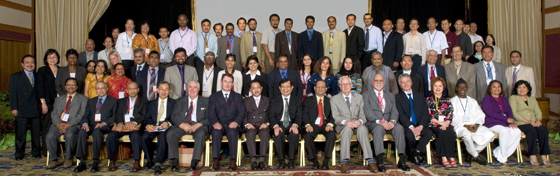
Sarawak: A group photo of Commonwealth Journalists Association 8th Conference participants with chief guest Deputy Chief Minister
Sarawak Yang Berhormat Datuk Patinggi Tan Sri Dr George Chan Hong Nam. Director Communication Division Commonwealth Secretariat
Eduardo del Buey and Director Commonwealth Foundation Dr Mark Collins are also sitting with him in first row while President
RMNP Ehsan Ahmed Sehar standing sixth from right in second row.
Founder Derek Ingram and CJA leaders demand the resotoration of CMDF
CJA 8th Conference Communiqure released
Kuching (Malaysia) October18: The Commonwealth Journalists
Association(CJA) has deplored the lack of funding committment on the
part of Commonwealth countries that has led to to the effective
suspension of the Commonwealth Media Development Fund.set up by Heads
of Governments to enhance Commonwealth-wide journalistic
excellence.Founder of CJA Derek Ingram,President Hassan Shahriar,and
vice president Chris Cobb while addressing a joint press confernce
after the conclusion of five days long Commonwealth Journalists
Association(CJA)Eighth Conference , News Targets for Today,a better
environment and a better democracy here in Kuching Malaysia read the
communique and responded the queries of mediamen.They stated that by
neglecting the CMDF and ignoring their committment,Commonwealth
leaders were obstructing the the CJA and other organisations in their
efforts to achieve the highest possible standards of journalism in the
modern Commonwealth.CJA leaders termed it unacceptable and stated that
it is more ironic,since in recent years Commonwealth Governments have
repeatedly emphasised in CHOGM declarations and communiques their
support for freedom of expression.They urged all Heads of Commonwealth
Governments to renew their committment to the CMDF at once and asked
the Secretary General to persuade the many governments which have
never contributed and those which have reduced or stopped their
participation to think again.
Founder of CJA Derek Ingram,President Hassan Shariar and Vice
President Chris Cobb vowed to continue their struggle in promoting the
freedom of expression in Commonwealth 53 countries and told that CJA
has documented evidence of journalists in some countries being abused
by despots masquerading as politicians.They determined to respond to
every act of abuse reported to us and would use the vast multi-nation
resources of CJA to ensure maximum publicity when journalists were
arrested ,tortured or even killed in their pursuit of truth.The
Commonwealth Journalists Association (CJA) also announced to encourage
increased and improved coverage of climate change in news media
throughout the Commonwealth.
CJA Communique revealed that by 2012 it is estimated that fully 17.5
percent of present by Bangladesh would have been inundated as a result
of the rising sea level.Bangladesh is an extreme case but many
Commonwealth Countries were similarly at risk,it concluded.Earlier
Secretary General Pakistan Press Foundation(PPF)Karachi ,Owais Aslam
Ali,Abbas Raza(Newsgagency PPI)Ehsan Ahmed Sehar President Rural Media
Network Pakistan(RMNP),S.M,Fazal President CJA Pakistan Chapter and
Editor Daily News Karachi,Ms Fauzia Shaheen Editor Daily Dastak
Karachi and President Women Media Centre and Ms Faryal Najeeb Business
Reporter The News Karachi attended the CJA general body meeting
inwhich Hassan Shahriar(Bangladesh)was unanimously reelected President
CJA for second term,Similarly four vice presidents,Florence
Yii,(Sarawak),Doyin Mahmoud(Nigeria)Martin Mulligan(UK) and Chris
Cobb(Canada) were also chosen unopposed.
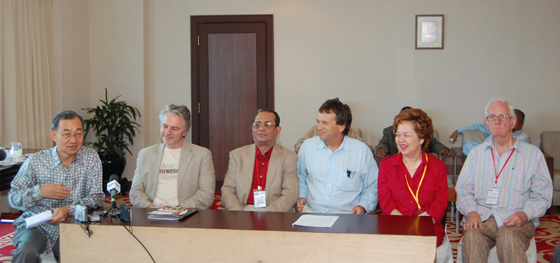
Kuching(Malaysia)CJA Founder Derek Ingram,Vice President Chris Cobb and President Hassan Shahriar,CEO AZAM Datu Aloysisus
Dris are addressing joint press conference while Vice Presidents Martin Mulligan and Ms Florence Yii are also sitting with
them.
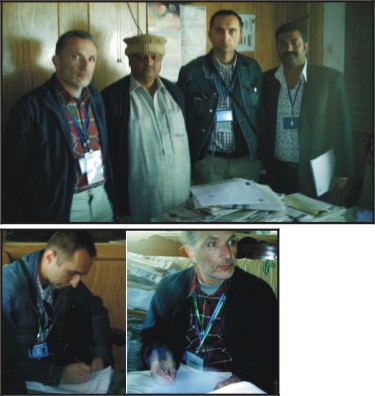
Top: European Union Election Observation Mission team members Georgi Mikov Dimitrov and Alfredo Nicoletti standing with President
Rural Media Network Ehsan Ahmed Sehar in his office press chambers.(Staff Photo)
Bottom: European Union Election Observation Mission team members Georgi Mikov Dimitrov and Alfredo Nicoletti taking notes
while talking to President RMNP on prevailing political and press freedom situation.in rural Pakistan.
European Union Election observation Mission Visits RMNP Office
Two members European Union Election Observation Mission comprising long term observers Georgi Milkov Dimitrov and Alfredo
Nicoletti visited AhmedpurEast, rural Pakistan for the monitoring of general elections process 2008.
They came to the office of The Rural Media Network Pakistan (RMNP) in Press Chambers at Katchery Road where they discussed
the prevailing election situation in Bahawalpur district with its President Ehsan Ahmed Sehar.
The meeting lasted for an hour in which EU election observers put volley of questions about different political parties candidates,
role of local governments and administration.
Georgi Milkov Dimitrov and Alfredo Nicoletti also enquired about press freedom situation in rural Pakistan and Freedom of
Information laws. President RMNP told them after the imposition of emergency in Pakistan,Press and Publications and PEMRA
ordinances have been amended.
He informed two members team that print media in Pakistan is to some extent free while private tv channels have been asked
by the government not to air critical talk shows and alive coverage of important events.
Ehsan Ahmed Sehar presented the copies of Freedom of Expression newsletter Sadiq News to both observers and told them about
monitoring press freedom violations and human rights abuses process conducted by Rural Media Network Pakistan.
Later on European Union Election Observers held a meeting with Retuning Officer AhmedpurEast Raja Mohammad Arshad in his office
and discussed with him about polling scheme and other matters related to general elections.
WAN Congress and Editor's Forum
The four day 60th World Newspapers Congress (WAN) and 14th World Editors Forum concluded in Cape Town, South Africa on 6th
June. It was attended by more than 1,600 editors, publishers and media personnel from 109 countries.
The President of the Rural Media Network Pakistan (RMNP), Ehsan Ahmed Sehar, was among the participants,
as a guest of the World Editors Forum.
The South African President, Thabo Mbeki, opened the Congress in the International Convention Centre, Cape Town. Nine sessions
of the Forum and five business sessions of the Congress were held in the Centre on the overall subject of Shaping the Future
of Newspapers and Quality Journalism in the Digital Age.
Media experts from the United States, Britain, France, Europe and Africa spoke during these sessions and the Vice President
of South Africa, Jacob Zuma, answered participant's questions.
The Founder of The Republic of South Africa, Nelson Mandela, did not attend due to illness, but a short video in which he
addressed the conference was shown at the conference dinner.
Source: Ehsan Ahmed Sehar 10 June 2007
|
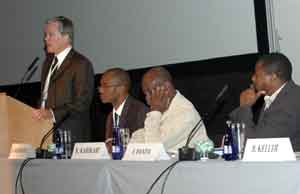
| Bill Keller addressing Annual Press Freedom Roundtable |
Press Freedom in Africa - the key to good governance and development
The Annual Press Freedom Roundtable was held under the auspices of the World Association of Newspapers (WAN) on 3rd June
2007 in the International Convention Centre Cape Town, South Africa.
The press freedom roundtable turned the spotlight on obstacles to the development of a viable and powerful press in Africa
and the panelists -
Azubuike Ishiekwene, Executive Director Publications Punch Nigeria Limited
Kwame Karikari, Executive Director, NAFEO and Media Foundation for West Africa, Ghana
Pius Njawe, Publisher Le Messager, Cameroon
Edtaen Ojo, Executive Director Media Rights Agenda Nigeria
Jeanette Minnie, International Freedom of Expression and Media Consultant,
Zambezi FoX, South Africa
Raymond Louw, Editor and Publisher. Southern Africa Report
Bill Keller, Executive Editor The New York Times USA
explained why press freedom remains a key to the establishment of good governance and durable economic, political, social
and cultural development, prosperity and peace.
The panelists stated that if any continent needed a strong free and independent press to act as a watchdog over public institutions,
it would be Africa where so many problems coincide - corruption, famine, poverty, violent conflict, disease and lack of education.
Yet in country after country the press is crippled by a panoply of repressive measures, from the jailing and persecution of
journalists to the widespread scourge of insult laws and criminal defamation which are used ruthlessly by governments to prevent
critical appraisal of their performance and to deprive the public of information about their misdemeanours.
Panelist Bill Keller, Executive Editor, The New York Times, also highlighted his experiences and African governments' role
toward freedom of press during his stay in Johannesburg as Bureau Chief of The Times.
|
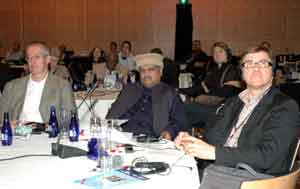
| Peter Fenilherade BBC, Ehsan Ahmed Sehar and French delegate |
The President of the Rural Media Network Pakistan (RMNP) Ehsan Ahmed Sehar presented his report about the
state of press freedom in South Asia and copies of RMNP free FOE newsletter to panelists and other editors.
The Roundtable
lasted for four hours. A question and answer session was also conducted by the panelists.
More than three hundred participants representing 105 countries including Sylviee Coudray, Senior Programme Specialist
UNESCO, attended the Annual Press Freedom Roundtable.
WPFD seminar
Mubarakpur (Rural Pakistan) - Democracy and changes in style of governance are prerequisite
for press freedom in the country, said regional politicians, journalists and academics in a seminar on 'State of Press Freedom
in Pakistan' at Press Club Mubarakpur held under the auspices of The Rural Media Network Pakistan(RMNP) on Thursday.
They termed media freedom and independent judiciary essential for democratic functioning of the government.
They expressed concerns over increasing intolerance and violence, which had made journalists vulnerable with murders of six
working media-men while 50 others were injured during last year in the country.
The speakers questioned quality and credibility of news and feared that news were being planted by interested parties. They
raised doubts about effectiveness of perceived media freedom in the country recently, which was only restricted to expressing
opinion while depiction of facts is being resisted by the rulers. They called commercial pressure as major challenge to the
press freedom.
President RMNP Ehsan Ahmed Sehar said that journalism was the fourth pillar of democracy but in Pakistan journalists were
facing various pressures.
He condemned the killing of journalist Hayatullah Khan. He said that recently Sohail Qalander was kidnapped by some unidentified
people for reporting against them.
He said that killings and kidnappings of journalists were increasing. "All journalists organisation are struggling for the
freedom of press. The use of violence to pressure journalists is condemnable because access to truth is the fundamental right
of people," he added.
President Press Club AhmedpurEast Shabbir Ahmed said that on the one hand, journalists were facing problems to bring facts
to light and on the other they were exploited.
He said that the owners of newspapers should implement the Wage Board Award. He said freedom of expression was indispensable
to highlight social evils. "People should help journalists in their fight against social evils," he added.
Journalists Mazhar Rasheed Missan,Rana Mohd Saleem,Mohd Ashfaq,Sheikh Mohd Akmal,Syed Fida Shah, Ms Sumera Naz Khokhar and
others emphasised the need for the international community's collective efforts to ensure complete freedom of the press globally.
They said that since the press plays a vital role in a state, it was imperative for governments to ensure its full freedom,
adding that print and electronic media in Pakistan presently had full freedom as compared to the past.
Speakers also bitterly criticised the sanctions imposed on the press in the world, including the Indian-held Jammu & Kashmir
state where media was suffering from sanctions imposed by Indian occupation forces. They said no foreign journalist from print
or electronic media was allowed by the Indian occupation forces to cover the daily tragedies suffered by Kashmiris because
of Indian troops. As many as 120 journalists hailing from rural areas of South Punjab attended this seminar while another
60 persons including politicians and academics were also present on this occasion.A special WPFD issue of Free monthly newsletter
Sadiq News was also distributed among the participants while messages of Director General UNESCO Koichiro Mastuura,CEO World
Association of Newspapers(WAN)Timothy Balding,Executive Director Commonwealth Journalists Association(CJA)Bryan Cantley,Communication
Officer Free Voice Aik Meeuse and Founder Citizems Media Commission Pakistan Javed Jabbar were also read on this occasion.
Source:
Nation 6 May 2007
|
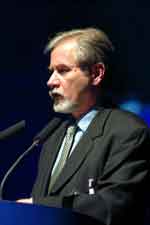
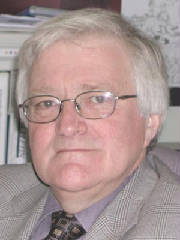
| Timothy Balding |
World Press Freedom Day statement
On this day - World Press Freedom Day - I extend my best wishes and words of encouragement to the rural press of Pakistan
on behalf of the World Association of Newspapers, which represents publishers and editors in more than 100 countries through
18,000 publications.
This year, WAN has chosen "Press Under Surveillance" as the theme of its annual World Press Freedom Day Campaign. In recent
years, countries worldwide have tightened their security and surveillance measures in reply to terrorist attacks and threats.
The objective of these measures is laudable and compelling - the protection of citizens against threats to life and property.
There is, however, a legitimate and growing concern that in too many instances such measures are being used to stifle debate
and the free flow of information about political decisions, or that they are being implemented with too little concern for
the overriding necessity to protect individual liberties and, notably, freedom of the press.
The theme of this year's WAN World Press Freedom Day Campaign is of particular concern for the Pakistani media.
In the past years, the press freedom situation in your country has continued to erode under the government of President Pervez
Musharraf. Media are not allowed to report freely on subjects considered sensitive by the military. Journalists who have done
so have been kidnapped and in some instances even killed. Through threats and legal harassment, the authorities have sent
repeated signals to Pakistani media that there should not be any negative reporting on the judiciary, the army or the state.
On this day, I call on the government of Pakistan to allow for the media to work freely without any interference or pressure.
It is of essence that the media of Pakistan enjoy total freedom in their coverage of terrorism and adjacent subjects. Press
freedom is not only a prerequisite of economic and political development but it also plays a crucial role in the struggle
against international terrorism.
Timothy Balding
Chief Executive Officer
World Association of Newspapers
|
| Bryan Cantley |
World Press Freedom Day statement
On World Press Freedom Day 2007 the Commonwealth Journalists association would like to pay tribute to the work being done
by the Rural Media Network (RMNP) for rural journalists in Pakistan.
Life, and death, is very real for journalists working in Pakistan as the numerous reports by media watch organisations from
there indicate. But too seldom do such reports show the disproportionate weight being carried by rural reporters and editors.
The Rural Media Network is doing much in the Pakistan countryside to show working journalists what they can do, to teach them
the skills they can use to do their work safely, and to stand up for them in public forums.
CJA also is aware of the strenuous attempts being made by RMNP and Sadiq News to publish in the local language and applauds
this effort to bring the media closer to the people.
We look forward to seeing another year of close co-operation with the Rural Media Network Pakistan.
Bryan Cantley
Executive Director
Commonwealth Journalists Association

World Press Freedom Day statement
The Committee to Protect Journalists extends its support and solidarity to the Rural Media Network Pakistan on World Press
Freedom Day. We join with all of our colleagues in Pakistan - in the cities and the countryside - in calling on governments
around the world to respect the rights of journalists and other media workers as they fulfill their duty of accurately and
honestly reporting the news.
Bob Dietz
Asia Program Coordinator
Committee to Protect Journalists
|
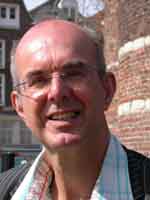
| Javed Jabbar |
World Press Freedom Day statement
In recent months in Pakistan, volatile conditions have developed
due to the suspension of the Chief Justice of Pakistan and due to on-going threats from terrorism, religious extremism, criminal
elements and power groups. The media in our country have had to face attacks on offices as well as assaults on individuals.
Several journalists have paid the price of fulfilling their professional duties in dangerous areas, sacrificing their lives
and, in some cases, even their family members have been killed. Many more have been injured and have been threatened with
physical punishment. Even as there is unprecedented freedom of the media in Pakistan in 2007, there are also the old ghosts
of the past and new demons as well.
The cause of preserving and strengthening media freedom and press freedom is a shared responsibility between all segments
of society and between all citizens.
Let us renew our pledge to protect and enhance freedom of expression, freedom which is conducted with integrity, fairness
and balance.
Javed Jabbar
Former Federal Minister for Information & Broadcasting
Founder Citizens Media Commission of Pakistan
|
| Aik Meeuse |
World Press Freedom Day statements
Free Voice
Free Voice is a Dutch foundation which supports independent media in countries in development. Free Voice is convinced of
the important role of pluralistic and reliable media for the development of individuals, organizations and open societies.
-They can give people a voice, and inform the authorities of their needs and wishes.
-They can control the government, the people in power and organizations, and make public cases of corruption misuse of power
and self-enrichment.
-They can give reliable and balanced information to people to form themselves balanced opinions and take well-considered decisions.
Aik Meeuse,
Communication officer
Free Voice
|
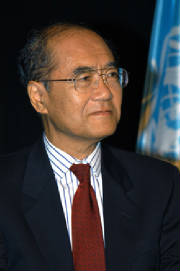
| Koichiro Matsuura |
World Press Freedom Day Statements
UNESCO
UNESCO DG on WPFD
World Press Freedom Day is an occasion to remind the world of the importance of protecting the fundamental human right of
freedom of expression enshrined in Article 19 of the Universal Declaration of Human Rights. With violence against media professionals
constituting today one of the greatest threats to freedom of expression, I have decided to dedicate World Press Freedom Day
2007 to the theme of journalist safety.
Over the past decade, we have witnessed a dramatic escalation of violence against journalists, media professionals and associated
personnel. In many countries around the world, media professionals are harassed, attacked, detained and even murdered. According
to professional organizations, 2006 was the bloodiest year on record with over 150 media killings. Hundreds more media workers
were arrested, threatened or attacked because of their work. Being a journalist has never been more dangerous.
We know that conflict zones - and post-conflict zones - are particularly hazardous environments for journalists. The worst
example is Iraq, where sixty-nine media professionals were killed last year. Over 170 media professionals, the vast majority
being local journalists, have been killed in the country since the conflict began in April 2003. Never in recorded history
has there been such a large-scale killing of journalists.
Those who risk their lives to provide independent and reliable information deserve our admiration, respect and support. They
understand better than anyone that media contributes significantly to processes of accountability, reconstruction and reconciliation.
Indeed, the growth in violence against journalist is telling, if tragic, testimony to the importance of the media to modern
democracies.
The safety of journalists is an issue that affects us all. Every aggression against a journalist is an attack on our most
fundamental freedoms. Press freedom and freedom of expression cannot be enjoyed without basic security.
On World Press Freedom Day, therefore, we must pledge to strengthen our efforts to secure journalist safety. In particular,
I call on all governments and public authorities to end the pervasive culture of impunity that surrounds violence against
journalists. Governments must fulfil their responsibility to ensure that crimes against media professionals are investigated
and prosecuted.
Today is also an occasion to recognize the progress that has been made in protecting press freedom. UNESCO welcomes the recent
UN resolution condemning attacks against journalists in conflict situations. This resolution represents a victory for the
campaign against impunity, and for those committed to protecting the independence and rights of media workers. We must exploit
this momentum to build a culture of safety within media.
As we celebrate World Press Freedom Day, let us reflect on ways to propagate values that respect the media's vital role in
promoting sustainable peace, democracy and development. Let us commemorate media professionals who have lost their lives,
and honour those who bring us information despite danger and risk. Above all, let us appreciate the intimate relationship
between securing the safety of journalists and realizing our own freedoms. Our ability to act as informed citizens of the
world depends on a media that can work freely and safely.
Koïchiro Matsuura
Director General
___________________________________________________________
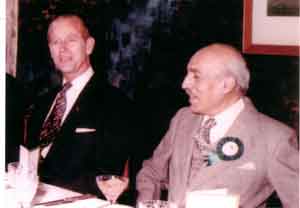
| Prince Philip and Nawab Abbasi |
|
Mohd Abbas Khan Abbasi was inducted as Amir Bahawalpur in 1966 by the President of Pakistan after the death in 1966 of his
father, Nawab General Sir Sadiq Mohd Khan Abbasi, the last ruler of the former princely state of Bahawalpur.
Mohd
Abbas served as Punjab Governor in the Bhutto regime and was a federal minister in the Zia ul Haq government. He was father
of the present Amir Nawab Salahuddin Abbasi.
Nawab Abbas died on 14th April 1988 and the twentieth anniversary of
his death anniversary was observed on 14th april in Bahawalpur Division.
Website inaugurated
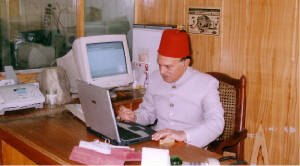
The Amir of Bahawalpur, Nawab Salahuddin Abbasi, inaugurated the Rural Media Network Pakistan website in a simple ceremony
held in the office of the daily Newspaper Nawa-I-AhmedpurSharqia at Kutchery road, Ahmadpur East on the 28th May 2006. Using
a laptop he opened the web site mounted by the Chairman of the Commonwealth Journalists Association (Australia) Mr Pieter
Wessels.
|
| Nawab Salahuddin Abbasi inaugurating RMNP website |
The Former Chairman of the Municipal Committee (Ahmedpur East) Mian Ilyas Ayaz , ex-councillor Syed Imtiaz Hussein Bukhari,
leading social and political activist Syed Akbar
Maqbool Zaidi, and local journalists were present. Addressing the RMNP web site launching ceremony Nawab Salahuddin Abbasi
said that the greatest development for freedom of expression was the Internet. This was one medium with the promise of making
Article 19 of the Universal Declaration of Human Rights a reality. The right to "hold opinions without interference and to
seek, receive and impart information and ideas through any media regardless of frontiers" seemed almost within reach of a
rapidly increasing proportion of humanity. The Internet also has the potential of providing global reach to Third World media
as publications in developing countries enter the era of electronic publishing and news dissemination through the Internet,
he added. Nawab Abbasi observed that in Pakistan the greatest threats to freedom of expression occur in rural areas, where
feudal and tribal lords and government functionaries can deliver brutal private punishment away from the glare of the national
and international media, to any journalist who dares to report their misdeeds. The freedom of expression community was now
using the potential of the Internet to promote free expression even in rural areas of developing countries. One such effort
was the Commonwealth Journalists Association supported project to use Internet technology to promote the creation of a networks
of freedom of expression monitors in rural areas of Pakistan. He hoped that RMNP website would highlight the social and economic
issues and enhance local communities access to information. Earlier, the Convener Rural Media Network, Ehsan Ahmed Sehar,
thanked the Chairman of the Commonwealth Journalists Association Australian branch, Mr Pieter Wessels, for creating the RMNP
website http://online-rmnp.tripod.com. He said this website would update rural journalists about journalism training, resources,
media laws and also expose freedom of expression violations in rural Pakistan. It would be available in both English and Urdu
and play a leading role in the campaign against human rights abuses. Later participants viewed the RMNP website, postings
about FOE newsletter Sadiq News, its links, home and news pages.
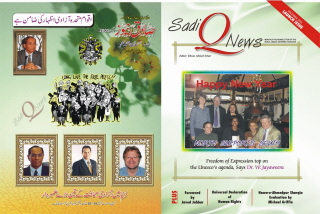
Sadiq News Launch 19 Dec 2005
|
| Launch edition December 2005 |
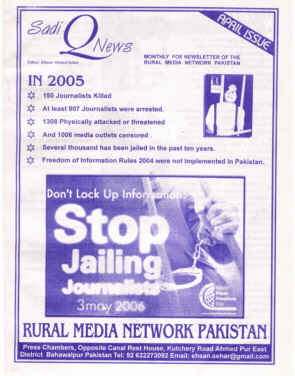
Sadiq News, a bulletin that covers freedom of expression issues for rural Pakistani journalists, distributed its inaugural
issue in December 2005. The Rural Media Network of Pakistan is publishing the newsletter with technical assistance from UNESCO's
International Programme for the Development of Communication (IPDC) and the Nawa-i-Ahmedpur Sharqia newspaper. The Urdu-language
newsletter includes information on press freedom violations, ethics, training, and other matters of interest to rural journalists.
The information comes from the Rural Media Network, the National Press Union, and local reporters in remote areas. The newsletter
will help rural journalists learn about their rights and improve their ability to network with colleagues.
|
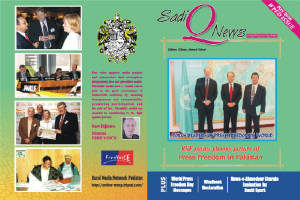
| May 2006 edition |
|
| April 2006 |
Sadiq News was launched at a dinner ceremony at Qazi house on 19 December
2005 which was chaired by Amir Bahawalpur Nawab Salahuddin Abbasi. Minister of State for Environment Government of Pakistan
Malik Mohd Amin Aslam Khan was the chief guest. MNA Bahawalpur Malik Farooq Azam also spoke. The Environmental Minister pledged
support for a training workshop on environmental reporting for rural journalists. Nawab Salahuddin Abbasi, the Amir of Bahawalpur,
announced funding for the Sadiq Press Freedom Award which will be given to a rural journalist whose work demonstrates strong
committment to press freedom. It will be announced on the eve of World Press Freedom Day every year.
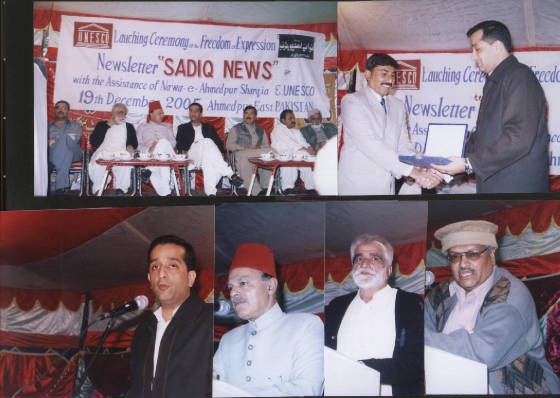
Bottom row left to right: Minister of State for Environment Malik Mohammad Amin Aslam Khan, Nawab Salahuddin Abbasi, MNA
Malik Farooq Azam and Ehsan Ahmed Sehar addressing the launching ceremony of the Freedom of Expression Newsletter Sadiq News
organised by Nawa-i-AhmedpurSharqia with the assistance of UNESCO.
Top row: The ceremony and on the right Minister Malik Mohd Ameen Aslam presenting the Press Freedom Defendant Award to
Mubarakpur journalist Mazhar Rasheed Missan.
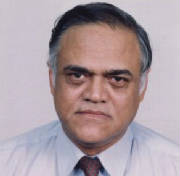
Foreword for Freedom of Expression newsletter Sadiq News
|
| Javed Jabbar |
The launch of the Freedom of Expression newsletter Sadiq News, away from the flash bulbs, the video cameras and the headlines
of mainstream media in large urban centres, marks a milestone in the development of media freedom in Pakistan.
The political economy and the sociology of the rural areas and of small towns in our country are quite distinct and specific
even while the whole country, like the rest of the world has become part of a singular global
city and a shared media environment.
A TV set inside a house in a small town may promote images of common global values of democracy and freedom of expression.
Yet, just a few feet outside the same house, there is likely to exist a whole apparatus of brute power that is well-used to
getting away scot-free after it violates the same global values and freedoms at the expense of a single courageous editor
or reporter who dares to report the truth.
While mainstream media do cover instances of crime and human rights violations in the rural areas, sustained attention to
the themes and incidents concerning freedom of expression in small towns and villages have
to compete unfairly with the conventionally big stories.
The publication of the Freedom of Expression newsletter Sadiq News will hopefully focus national and international attention
on the themes and concerns of the subject as they relate to a part of Pakistan where over 60% of people still reside and where
there remains the greatest need to develop both the media, access to media and the strengthening of freedom of expression
without fear.
I commend Mr. Ehsan Ahmed Sehar for his consistent contribution to the advancement of journalism and the values of balanced,
truthful, independent expression.
Javed Jabbar
former Minister for Information and Media Development
founder Citizen Media Commission of Pakistan
|